What is Solar PV?

Solar photovoltaic systems commonly referred to as solar PV systems, convert sunlight directly into electricity. This is different from the solar thermal collectors for solar water heaters. A solar PV system can help reduce carbon emissions and your electricity bill by producing sustainable electricity from the sun instead of burning fossil fuels.

Solar PV first appeared in niche markets in the 1950s and slowly became more mainstream as it was used in off-grid applications.

Most electricity is distributed through an electrical utility provider, the company that produces and/or distributes electricity to consumers. The electricity from a variety of sources is distributed along the electrical grid and can span hundreds of miles from the power plants to homes and businesses. This grid network is not always reliable due to overloading, severe weather, and maintenance or upgrades. Installing a PV power system allows you to create your own electricity to supply your entire home or business and can potentially eliminate the issues associated with large utility grids. The amount of electricity generated is dependent on several factors: the size and arrangement of the PV power system, the PV module type, the available sunlight, and the efficiency of the electrical components used to convert solar energy into electricity usable by your home or building.

Definition of Solar PV

Solar Photovoltaic (PV) is a technology that converts sunlight into direct current electricity by using semiconductors. When the sun hits the semiconductor within the PV cell, electrons are freed and form an electric current.

Solar PV technology is generally employed on a panel (hence solar panels). PV cells are typically found connected to each other and mounted on a frame called a module. Multiple modules can be wired together to form an array, which can be scaled up or down to produce the amount of power needed.

How Solar Panels are made?

PV cells can be made from various semiconductor materials. The most commonly used material today is silicon but other materials, such as the ones listed below, are being tested and used to increase the efficiency of converting sunlight to electricity.

Monocrystalline Silicon
Polycrystalline Silicon
Amorphous Silicon
Cadmium Telluride (CdTe)
Copper Indium Gallium Selenide (CIGS)

Almost 90% of the world’s PV technologies, today, are based on some variation of silicon. Monocrystalline is referred to as single-crystalline, these solar panels consist of one crystalline structure, given them deep dark shading. Monocrystalline cells have the most noteworthy energy efficiency at around 15%-21%, which means they convert 15%-21% of the absorbed solar energy into electricity. It is considered the highest quality of the types of material.

A Polycrystalline cell is referred to as multi-crystalline cells. It has more silicon impurities than monocrystalline panels. This makes it less efficient, normally converting around 13-16% and more affordable.

Thin-film solar panels are made by placing a few thin layers of photovoltaic over one another to makes the module. There are a couple of various kinds of thin-film solar panels, and the way by which they differ from one another comes down to the material utilized for the PV layers. The sorts are as per the following:

  • Amorphous silicon
  • Cadmium telluride
  • Organic PV cells
  • Copper indium gallium selenide

These solar panels are considered the least expensive solar panels and these panels have very low energy efficiency.

The major difference between the technologies is the material used to generate electricity out of sunlight. Each type of material has different attributes, resulting in different applications and efficiencies. In general, the efficiency of solar PV technologies varies, ranging between 6-18% at the moment.

How PV Systems Work

Grid-connected PV System

The grid-connected solar photovoltaic (PV) system is a common and cost-effective option to reduce electricity bills and emissions. It consists of PV modules, a grid-connect inverter, associated mounting hardware, and electrical cables and safety devices. You can generate your own renewable energy on site, and supplement your electricity needs from the local utility grid when the PV system is not supplying enough energy. You can also export excess electricity back to the utility company when the PV system is generating more electricity than you need. The way this exported electricity is metered and the rate of financial return varies by country, state and utility provider. The downside of this system configuration is that you are still connected to the grid. Depending on local regulations the system will automatically shut down if the grid becomes unavailable, meaning you will not produce any solar power during this time, and would still experience blackouts. You would also only use solar power during daylight hours with good solar irradiation, so at night and on cloudy days you would still draw power from the grid and pay an electricity bill.

Grid-connected PV System with Batteries

A grid-connected photovoltaic (PV) system with batteries gives you the best of both worlds. The PV modules can be used to charge a battery bank during the day, and then provide this electricity to your home or business whenever it is needed (day or night). Maintaining a connection to the grid also allows for electricity to be supplied during periods of high use or when the weather is bad for extended periods. Depending on local regulations and government incentives, you may be able to export electricity from your battery bank at times when the utility provider needs it most, and attract a higher rate of return for that solar power. This system could also be configured to supply DC loads from the battery bank.

Off-grid PV System

The off-grid solar photovoltaic (PV) system can be extensively applied in remote locations, and other areas not covered by the main power grid. The PV modules generate electricity that is used to charge batteries during sunlight hours. This can then power DC loads directly or be provided to the AC load through the inverter. This system configuration provides independence from the utility grid however there are limitations on the days of autonomy and the size of the loads that can be supplied by batteries and inverters on their own.

For some applications where small amounts of electricity are required, like emergency call boxes and UPS systems, PV systems are often cost justified even when the grid is accessible. When applications require larger amounts of electricity and are located away from existing power lines, PV systems can in many cases offer the least expensive and most viable option.

Advantage of Solar PV

  • PV panels provide clean – green energy. During electricity generation with PV panels, there is no harmful greenhouse gas emissions thus solar PV is environmentally friendly.
  • Solar energy is the energy supplied by nature – it is thus free and abundant!
  • Solar energy can be made available almost anywhere there is sunlight
  • Solar energy is especially appropriate for smart energy networks with distributed power generation – DPG is indeed the next-generation power network structure!
  • Solar panels cost is currently on a fast reducing track and is expected to continue reducing for the next years – consequently, solar PV panels have indeed a highly promising future both for economical viability and environmental sustainability.
  • Photovoltaic panels, through the photoelectric phenomenon, produce electricity in a direct electricity generation way.
  • Operating and maintenance costs for PV panels are considered to be low, almost negligible, compared to the costs of other renewable energy systems.
  • PV panels have no mechanically moving parts, except in cases of sun-tracking mechanical bases; consequently, they have far fewer breakages or require less maintenance than other renewable energy systems (e.g. wind turbines).
  • PV panels are totally silent, producing no noise at all; consequently, they are a perfect solution for urban areas and for residential applications.
  • Because solar energy coincides with energy needs for cooling, PV panels can provide an effective solution to energy demand peaks – especially in hot summer months where energy demand is high.
  • Though solar energy panels’ prices have seen a drastic reduction in the past years, and are still falling, nonetheless, solar photovoltaic panels are one of the major renewable energy systems that are promoted through government subsidy funding (FITs, STCs, other tax credits, etc.); thus the financial incentive for PV panels make solar energy panels an attractive investment alternative.
  • Residential solar panels are easy to install on rooftops or on the ground without any interference to residential lifestyle.

In this article, we’ve discussed solar PV- Overview of solar PV, how solar PV is made, how solar PV works, its advantages, etc. If you want to protect the planet by cutting back on your dependence on nonrenewable energy and reduce your monthly electric bill, then get your free solar quote today!

How to maintain Solar Panels?

Solar panels are incredibly reliable. Thus Solar Panels maintenance need on regular basis. Most systems have no moving parts, and the lifespan for a solar panel can exceed thirty years. This means that solar panel installation companies routinely offer very long warranties and maintenance packages as part of your system cost. Despite this, some preventative maintenance is necessary to go a long way towards the longevity and efficiency of your system, and it’s good to know what to do if there is a problem with any of your panels. Follow these tips for decades of clean electricity and save on your energy bill.

Solar panel warranties

Solar panel manufacturers provide a range of warranties that guarantee you will have support and coverage in the unlikely event of an issue, such as hail or falling tree branches. Solar panel warranties are transferable to new homeowners should you sell your home. Power output warranties guarantee that panel performance won’t fall below a specified level over the term of the warranty (usually 25 years). As an example, a manufacturer might provide a warranty to guarantee that peak power output won’t fall below 85 percent for 25 years.

Some manufacturers will also include an additional warranty that promises a higher output level over a shorter period of time. As an example, a secondary warranty might guarantee no less than 90 percent of initial power output for the first 10 years.

Solar Panels typically come with a workmanship warranty that protects consumers against defective panel parts, generally for the first five years of operation. Inverters also come with warranties, usually for 10 years.

Your solar panels Maintenance

Solar panels are made of tempered glass, so they’re built to withstand hail and other rough weather. With the exception of tracking mounts, solar panel systems don’t have a movable part, which cuts down on the possibility of any problems.

Any issues with solar panel performance are usually related to electricity production, which is why most installers recommend monitoring your system’s production. By paying attention to changes in production, you can identify and address issues proactively.

Generally, solar panels don’t need to be cleaned. They are very durable and should last around 25-30 years with no maintenance. If you live somewhere where there is a lot of smog, dust, or dirt, you may see a dip in your production over time that can be remedied by cleaning your panels. If your panels are mounted on your roof, however, your best option is to hire a professional cleaning service rather than try to clean them yourself. Your installer will be able to recommend someone local to help you.

Caring for Your Solar Panels in All Seasons

Solar panels require very little regular maintenance. Generally, any failures that do occur are related to electricity production or corrosion in the wires that tie your system to the inverter, rather than with the panels themselves.

Remember, though, that solar panels produce electricity only if the sun is shining directly on them. Any obstructions from dust, snow, or vegetation will cut into your production—or halt electricity generation altogether. If you live in an especially dusty area or an area that experiences regular snowfall, keeping your panels clean and unobstructed will result in more power generation.

Regular Rinses for Dust and Pollen

Summer should be a very productive season for your solar array. However, your panels may become clouded by dust, grime or tree pollen from time to time. A rainstorm is usually enough to clean off a solar panel, but in arid climates, summer storms are few and far between.

If you live in an especially dusty area, and you aren’t expecting any rain, you can rinse the dust off with a garden hose. This method is ideal if you can safely reach your panels from the ground without a ladder. Be sure the water you’re using to clean your solar panels is demineralized; hard water can cause scaling or corrosion over time.

For homes where dirt or pollen buildup becomes a recurring issue, installing a roof-mounted sprinkler system is an option to take the headache out of regular cleaning. Make sure your sprinkler system is installed under the supervision and approval of your solar installer, so the sprinklers won’t negatively impact your roof or your panels.

Snow and Ice Removal

For areas with high chances of snowfall, regular snow removal may be difficult. Most of the time, snow on your roof will melt off over a day or two from the heat of the sun and the heat produced by your home—though the panels will need at least a fifteen-degree tilt for this to work well. In the event that it’s too cold for the snow to melt off, a snow rake can help you clear drifts. Again, check your warranty to ensure it won’t be voided by the use of cleaning tools.

Ice buildup is another concern, as it may weaken your roof and threaten the integrity of your solar panels. Removing ice from your roof may be necessary in some cases to prevent eventual water penetration, pooling, or even structural damage. However, the use of salt as snowmelt may cause corrosion on your rack or the panels themselves, making ice removal a challenge. Situations like these warrant consulting a professional maintenance service recommended by your solar installer to prevent any long-term damage or issues.

Besides ice buildup, you shouldn’t have to worry about the integrity of your solar panels in most weather conditions. Even serious weather conditions like hailstorms are within the strength tests of the tempered glass used on solar panels. However, in the event one of your panels becomes cracked, contact your solar installer immediately for repair or replacement of the broken panel.

Electrical Component Care in All Seasons

The wiring that ties your solar panels to your home should last for the life of your system. The best way to avoid any electrical issues is to go with an experienced and certified installer. Expert installers know where systems commonly fail and will avoid poor wiring that could result in water exposure or other issues that might halt your production.

Many modern systems also come with real-time system monitoring, so you should be alerted to any electrical issues fairly quickly. These monitoring systems usually output data to the web or an app on your Smartphone. You can check the production totals of each individual panel. This is useful for quickly spotting any “dead” panels that aren’t producing electricity, either due to a problem with the panel itself or—more likely—the connection between the panel and the inverter. Any time you notice an unexpected loss in electricity production, you should contact your solar installer to come to do an inspection of the wiring.

Electrical Component Care in All Seasons

Preventative maintenance can go a long way towards the life of your solar system. Have your installer conduct a regular inspection of your installation to diagnose and address any issues.

  • Water damage at any roof penetrations
  • Roof drainage issues
  • loose leaves or Vegetation growth in the roof
  • Proper expansion joints, supports, and bushings in long conduit runs
  • Corrosion on electrical enclosures or the rack system
  • Loose or exposed wiring, or wiring that contacts the roof surface
  • Signs of animal infestation
  • Excessive cracking or wear on the inverter
  • Burn marks, discoloration, or broken glass on solar panels
  • Missing bolts
  • Corrosion or erosion of system supports

Depending on your system, your solar installer may also choose to conduct isolation tests to determine if there is any damage to the wiring insulation or any resistance from loose or broken connections. If you notice a drop in your production, or if your system monitoring has revealed a dead panel, these tests can be conducted to isolate the problem for maintenance.

Electrical Component Care in All Seasons

Most solar systems are tied to the electrical grid, making any maintenance potentially hazardous. Never attempt to repair any component of your solar system yourself. Any solar maintenance should be conducted by trained technicians. Clean Energy Council recommends all accredited installers to advise the owner of a system if it does not comply with the current standards. This could be as a result of weathering, damage, or upgrading of the standards themselves. This requirement highlights the danger in working with electrical systems and the importance of hiring an installer with the certifications to conduct maintenance down the road.

You need to consider your own personal safety when cleaning your solar panels. Almost all reputable installers will be happy to put you in touch with a cleaning service that can do the job professionally.

With proper maintenance at set intervals, frequent visual inspections, and regular cleaning of your panels, you should experience relatively problem-free ownership for decades. Be sure to look at the track record of your solar installer to ensure they’ll take care of your solar system for the extent of its productive life. Well-established solar companies with experience, certifications, and local knowledge are the best choices for your installation.

Benefits of Solar Rooftops

Nowadays, we all realize how much it is necessary to switch to clean, reliable renewable sources than to depend on non-renewable sources. The world has been adopting renewable sources at a rapid rate. The shift toward clean, reliable, affordable electricity in Australia is most visible in the rapid growth of solar panels placed on top of roofs of commercial, institutional, or residential buildings. According to solar power statistics in Australia, this form of renewable energy is a developing industry. Extremely high potential for solar energy produces in Australia through intense sunshine and other vast resources for its environmental benefit.

A record of 11.5 million solar panels has been installed nationally from rooftop panels and large-scale solar farms. The report shows that 2018 is predicted to produce over 13 million individual solar panels. More than 10,000 people were employed directly in the sale and installation of rooftop solar panels in Australia.

Government figures show that a record of 3.5 million rooftop solar panels was installed by businesses and homes in 2017 alone. They are now selling their excess energy back to the grid. Even more than triple the numbers of batteries were installed last year, than the year before. The clean energy regulator demonstrated that the average solar system size in Australia has increased by 200% due to decreasing prices and increasing technology.

Solar energy is a renewable source of energy. Solar rooftop is solar panels placed on top of roofs of commercial, institutional or residential buildings. They capture the light energy emitted by the sun and convert it into electrical energy. This set-up is well known as solar rooftop photo-voltaic system. A well-suited five-kilowatt solar (photovoltaic, or PV) system can generate the equivalent of two-thirds to three-quarters of a typical household’s electricity use.

The energy derived from the sunlight, it has a wide range of applications and one of which is Rooftop solar system. It is used to convert solar energy into electrical energy to cater residential and commercial needs. It is quite useful and economical as compared to traditional electricity connection. Individuals and businesses have been attracted not just to the environmental benefits of solar power, but also to the ability to generate their own power and to the fixed and competitive price of electricity that these systems provide.

Few advantages to use solar rooftops

Electricity bill reduction

One of the biggest advantage of installing rooftop solar system is that you can eliminate or significantly reduce your electric bill. Solar rooftops are very cost effective. It is a one-time investment which has a guaranteed life for a much longer time. A normal electricity connection that you get from the state government is chargeable on a monthly basis which amounts too much more than what one pays for rooftop solar system at the time of installation. Besides that generally electricity prices keep on fluctuating from time to time. So, it is difficult to calculate the expenditure on electricity for a certain period of time. However, when it comes to electricity generated by solar rooftops, you also fix your electricity costs and make your monthly bill more predictable. So you can easily maintain your expense forecasting and management capabilities.

Environmental Effects

Solar rooftops are solar panels placed on top of roofs of commercial, institutional or residential buildings. They capture the light energy emitted by the sun and convert it into electrical energy. It produces a clean, Eco friendly form of energy. It does not produce any type of pollution or harmful gases. So it helps to decrease environmental issues like climate change, air pollution or any kind of health problems related to carbon emissions. No extra land is required to set up rooftops. With widespread usage, solar rooftops can help in minimizing global warming.

Smart Policies: Tax incentives and subsidies

There are many tax advantages to installing a solar rooftop system. You’d get government rebates and other financial incentives are keys to the success of rooftop solar and the clean electricity that these systems provide. Some effective policies are being used:

Small Scale Technology Certificates (STCs) –The federal government offers Small Scale Technology Certificates (STCs) for residential and smaller commercial entrepreneurs who invest in solar rooftops system.

Feed-in tariffs– If you install a solar system, Feed-in tariffs (FiTs) are also available for households or businesses. It means you’ll be paid for excess electricity generated by your solar PV systems which send back to the grid.

Net metering- Net metering is billing mechanism that give system owners credit on their utility bills for generating more electricity than they use, generally at the full retail electricity rates.

Increase your home value

Value of your home goes up high as soon as you get rooftop solar system installed. Every potential buyer would want to reduce long-term recurring costs like electricity and thus the home gets more appealing to them. Millions of Australian homeowners are interested in solar panel rooftops but haven’t taken the time to figure out what it takes to install them. This consumer reality and the undeniable benefits of having solar panels on a home complements recent studies that found property values increase after solar is installed. If you invest solar panels rooftops, then you’ll get the increased resale value of your homes when you sell your home in future.

Cost-Output comparison

As solar panel installations are increasing in number over residential and commercial roofs, the most talked about thing is the total energy costs incurred. It has been found out that savings in cooling costs amounted to sending 5 percent more solar energy to the grid than the system is actually producing for the building. So, to put it simply, the system works on 100% of its capacity which equals 105% of the traditional system and to top it all off, it demands more money and attention than the system.

Very low maintenance

Rooftop Solar System is a very low-cost maintenance system. It just requires proper cleaning of the system from time to time which is a very basic thing that it can demand. The lifespan is at least 25 years, which keeps you worry free for a much longer period of time. Connection stay put and everything holds tight. Basically, no major costs involved.

Through the installation of rooftop solar panels, we help ourselves, the environment, wildlife and our future generations by saving a lot of non-renewable energy. So, there will be no harm and only benefits of taking this step towards contributing to the economy on a personal level.

What solar system size do I need?

After the government announcement about fantastic rebates in solar power installation, solar panels are so affordable right now. In fact, it is now possible to get a top-quality solar system to pay for itself within 3-5 years, saving your households tens of thousands of dollars over the life of the system. So what size solar installation system will best fit your home or business?

For an idea, a solar power system can save you up to $100 per kW in every quarterly bill, and you will get an output around 4 times its size as a daily average.

For example, a 10kW system will output around 40 kWh in a day & it can save you up to around $1000 in every quarterly electric bill. This rule of thumb for the households be good enough to search the answer to the question ‘What solar system size do I need?

To measure the accurate size of the solar system you need, you have collected a few pieces of key information from the household:

  1. What is the electrical load for the household? How much energy does the home consumed daily?
  2. What is solar resource/insolation? What is the strength of that sun or how much the Sun shines in your location?
  3. What is the portion of the home’s energy do you need from your solar power system? (i.e. 40%, 75%, 100%)

What is the electrical load for the household? How much energy does the home consumed on a daily?

The best way to calculate the above, you need to analyze the average of your last few months electric bills (to gather the average monthly electricity bill) and also need to find out the total consumption of kWh in a month for the household. After that, you need to calculate the average yearly usage with the above.

As per ‘Energy Information Administration’ it has estimated that the average family uses 940 kWh per month or 11,272 kWh/year.

There is another way to find out your home’s energy usage, it’s called TED (The Energy Detective), a whole-house monitor.

A whole-house monitor (TED) attached to your home’s electric meter and that will give you an accurate reading of energy consumed in the household on a daily basis. These types of equipment are really helpful because they will provide you with real-time information in a slick format.

What is solar resource/insolation? What is the strength of that sun or how much the Sun shines in your location?

The Solar intensity or Solar Insolation is measured in equivalent to the sun hours in a day at your locality. Full Sun hour is equivalent to one hour of maximum, or 100% sunshine received by any solar panel. You can take 6 hours of full sun hour, even though the sun may be above the horizon for 10-14 hours a day. One is a reflection because of the high angle of the sun in relationship to your solar panel. The second is additionally because of the high angle and also the quantity of the earth’s atmosphere the sunshine is passing through. When the sun is straight overhead the sunshine is passing through the least the smallest quantity amount of atmosphere.

Early or late within the day, the daylight is passing through far more of the atmosphere because of its position within the sky.

A tool called PV Watts, invented by The National Renewable Energy Laboratory (NREL) is used to give permit professional installers and non-experts to quickly obtain performance estimates for grid-connected PV systems. The tool takes a few runs to get familiar with, but once you figure it will be critical for sizing your systems.

This is how you can determine the output of a system you are planning (A really simple but the rule of thumb formula):

(Ave. Hours of Sun) x (PV array wattage) x 75% = Daily watt-hours

We take the fudge factor as 75 percent; into account the real-world effects on a system. It certainly can vary, but not more than 5-7%.

What is the portion of the home’s energy do you need from your solar power system? (i.e. 40%, 75%, 100%)

In a grid-tied system, you ought not to cowl 100% of the home’s electricity load, additionally you’ll not manufacture power once the grid is down.

Based on your solar resource, your household limitations, and your finance you’ll decide what share of the electrical load you would like to hide for your purchasers.

In choose states, you’ll sell excess electricity through a web metering program to your utility, however, it’s not out there altogether states.

Determine Insolation

  1. Locate a solar insolation table online to determine the insolation, the average number of hours per day that the sun produces peak sunlight (i.e. an accumulation of all sunlight equivalent to that amount of peak sunlight), for your area.
  2. Find the nearest city to you on the table and write down the average daily figure. To determine specific insolation data for individual days of the year.

Determine Insolation

  1. Plug the figure from Section 1, Step 3 “Daily kWh” into the following calculation. Use the average insolation value from Section 2, Step 2 for the “# hours” to determine how many kW you need your solar system to generate per day: Daily kWh / # hours = # kW
    e.g. 12 / 4 = 3
  2. Plug the answer from the previous step into the following calculation, which accounts for standard energy losses of solar PV systems: # kW x 1.3 (increase the size of the PV system by 30%) = # kW (actual size of PV system you need)
    e.g. 3 x 1.3 = 3.9In this example, you would need a 3.9 kW solar PV system to satisfy your home’s energy needs.

Size of Solar Panels

To calculate the size of your solar photovoltaic system, take your daily kWh energy requirement, and divide it by your peak sun-hours to get the kW output you need. Then divide the kW output by your panel’s efficiency to get the total number of solar panels for your system.

After you know the number of panels you need, the next step is to determine if you can fit them all on your roof and if you have the right kind of roof to mount panels on.

Total Number of Solar Panels

  1. Measure how much space you have to mount your solar panels.
  2. Decide on a budget for your system.
  3. Find a system that satisfies your power requirements, but still fits within your space restrictions. This will determine if you need a roof-mounted or ground-mounted system and if you’re eligible for a solar roof shingle system.

What are the applications of solar technology?

Solar energy can be categorized in two different ways: in the form of light and heat. We utilize solar energy in different ways. At this point, when we hang clothing outside to dry in the sun, we are utilizing the solar heat to dry our garments. Plants can make their food in the sunlight. We get nourishment from plants. Non-renewable energy sources are really solar energy which is stored a million years back.

There are various products that use solar energy. These are called sun-powered gadgets (or apparatuses) or solar thermal collectors. Solar thermal technologies utilize solar heat energy to heat water or air for applications, for example, space heating, pool heating, and water heating for homes and organizations. Let’s have a look at the applications of solar technology in different sectors.

There are three essential technologies by which solar energy is an outfit: photovoltaic (PV), which convert light to power; concentrating sun based power (CSP), which uses heat from the sun (thermal vitality) to drive utility-scale, electric turbines; and solar heating and cooling (SHC) systems, which gather thermal energy to give hot water and air heating or molding.

Major applications of solar energy are as per the following

Concentrating Solar Power (CSP): Concentrating sun based power (CSP) plants are utility-scale generators that produce electricity utilizing mirrors or lenses concentrating solar energy. The four main CSP technologies are dish-Stirling engine systems, central receivers, parabolic troughs, and concentrating photovoltaic systems (CPV).

Solar Thermal Electric Power Plants: Solar thermal energy control solar power for practical applications from solar heating to electricity generation. Solar thermal collectors, for example, solar hot water panels, are generally used to create solar hot water for household and light industrial applications. This energy system is utilized in engineering and building designing to control warming and ventilation in both active and passive solar designs.

Photovoltaic: Photovoltaic or PV technology uses solar cells or solar photovoltaic arrays to convert solar energy into electricity. Solar cells manufacture direct current from the solar rays, which can be used to power appliances or to recharge batteries. Several pocket calculators integrate single cell, but for larger applications, cells are grouped together to create PV modules that are successively organized in solar arrays. Solar arrays are used to power orbiting satellites and spacecrafts, and in remote areas, as a supply of power for emergency telephones, remote sensing, and electrode protection of pipelines etc.

Solar Heating Systems: Solar hot water system uses daylight from sun’s energy to heat water. The systems are composed of solar thermal collectors and a storage, and that they can be also be active, passive or batch systems.

Passive Solar Energy: It uses for design of building to maintain of its atmosphere at a comfortable temperature through the solar energy. It is done by (1) direct gains i.e. the positioning of windows, skylights, and shutters to manage the quantity of direct radiation reaching the inside and warming the air and surfaces inside a building; (2) Indirect gain that means solar radiation is absorbed by a locality of the building envelope and transmitted indirectly to the building through physical phenomenon and convection; and (3) Isolated gain which is involved passively absorbing solar heat and so moving it passively into or out of the building through a liquid or air directly or using thermal store. Sunspaces, solar closets, greenhouses area unit are the other ways of absorbing isolated heat gain from warm air is taken.

Solar Lighting: It is known as daylighting. It can be the utilization of natural light to produce illumination to offset energy which is used in electrical lighting systems and bring down the cooling load on HVAC systems. Daylighting options involve building orientation, window orientation, exterior shading, saw tooth roofs, clerestory windows, light shelves, light-weight tubes and skylights. As a keystone of sustainable design, architectural trends are going to be more and more recognized daylighting.

Solar Cars: It is an electrical vehicle powered by energy which is obtained from solar panels on the surface of the car that converts the solar energy directly into electricity. Solar cars don’t seem to be presently a shape of transportation. Though without sun they’ll operate for restricted distances, the solar cells are terribly fragile.

Solar Power Satellite: A solar energy satellite (SPS) could be a planned satellite inbuilt high Earth orbit that uses microwave power transmission to beam solar energy to a massive antenna on Earth .It will be used in place of typical power sources. The advantage of putting the solar collectors in an area is the clear view of the sun, unchanged by the day/night cycle, weather, or seasons. However, the price of construction measures very high, and SPSs won’t be ready to contend with typical sources unless low launch prices will be accomplished or unless a space-based producing business develops and that they will be inbuilt orbit from off-earth materials.

Solar Updraft Tower: A sun based updraft tower is a proposed kind of sustainable power source control plant. Air is heated in an enormous roundabout greenhouse like structure, and the subsequent convection makes the air rise and get away through a tall tower. The moving air can drives turbines, which helps to produce power. There are no solar based updraft towers in activity at present. An exploration model worked in Spain during the 1980s, and EnviroMission is proposing to develop a full-scale power control station utilizing this Australia’s technology.

Renewable Solar Power Systems with Regenerative Fuel Cell Systems: NASA has perceived the advantage of regenerative fuel cell (RFC) systems to give energy storage to solar power frameworks in space. RFC frameworks are remarkably able to give the fundamental energy storage to solar based surface power frameworks on the moon or Mars , during long time of darkness, for example during the 14-day lunar night or the12-hour Martian night. The idea of the RFC and it’s inherit structure adaptability empowers it to effectively meet the necessities of room missions. Also, over the span of actualizing the NASA RFC Program, scientists perceived that there are various applications in government, industry, transportation, and the military for RFC frameworks too.

Micro inverters & how are they different from other inverters

A solar micro-inverter is simple a plug-n-play device, generally used in Solar Panels. It converts the solar panel generated direct current (DC) to alternating current (AC) in form of electricity that can use at your home or office. As everyone can see the Solar panels on top, and we think that it does everything for a complete Solar Power system. But in a real scenario, it’s the micro inverter that does all the real work. So if you are about to choose an inverter, when going solar, that will be the most vital & crucial decision you’ll have to make.

A good Micro inverter should give you higher production, advanced intelligence, and greater reliability.
In short, the advantages of Micro-Inverters are:

Despite the fact that the NSW Solar Bonus Scheme finished in 2017, falling solar-based costs and rising power costs imply NSW occupants keep on taking up solar-based.

  • Micro inverters work independently, as each panel can perform at the most. One dirty or shaded panel won’t affect other parts of the solar power system.
  • Micro inverters produce more energy for a longer solar day in low-light or at dawn, dusk conditions with the use of burst technlogy.

Let’s have a look at the micro inverters available in Australia, which will be best, suited for your solar power system:

  1. Enphase IQ 7 and IQ 7X Micro inverters: With The high-powered smart grid-ready Enphase IQ Series Micros™ technology it produces the highest system efficiency. It has optimized for high-powered cell-like, 60-cell, 72-cell* and 96-cell* modules.
  2. SMA TS4-R-DEN1725 Inverter: It has the TS4-R module technology, which is a cost-effective system that fits into any PV module design to make it an exact solution for every solar application. It ensures and configuration flexibility & maximum energy yield, and minimal maintenance costs.

How are the macro inverters different from the other types of inverters?

The grid-tied solar inverters are in 3 types: micro, string & central. In this part of this blog, you will learn, how the micro inverters are different from the other 2 types with each type’s advantages and disadvantages. A series string inverter (a traditional way of connecting solar panels together) can cause a few numbers of complexities. These problems can overcome by using Micro Inverters in Solar Power System. Let’s discuss the complexities:

High Voltage DC: A series string inverter can create a risk of very high temperature arcing and potentially fire by producing a high voltage DC. As micro inverters convert DC to 240V AC, which can minimize the potential risks.

Switchgear: In Micro Inverter, it requires switchgear, which is cheaper & more commonly available. High voltage DC (mainly String inverters) requires relatively expensive protective switches and fuses.

Shading: As Micro Inverters are located independently on each solar panel, their outputs are completely independent of each other. So that no external materials like bird poo, can affect the soiled panel. But in a series string, shading can dramatically affect the entire.

Solar panel mismatch: At the time of manufacturing of solar panels, due to imperfect manufacturing tolerances, they each have slightly different electrical characteristics. It’s effect as “mismatch” when they are connected together in a series string. But in Micro inverters, they adapt to the individual characteristics of each panel to avoiding mismatch.

Maximum Power Point Tracking

Like the effect of mismatch, different electrical characteristics also create different Maximum Power Points for each solar panel. The maximum Power Point is the perfect point for extracting maximum power from a solar panel and micro inverter attached to individual solar panels can therefore target this point better.

Monitoring and fault finding

Almost all inverters have some level of monitoring and fault finding however; it can only see the combined output from every solar panel in the series string. A micro inverter, however, can monitor each solar panel individually, allowing you to easily identify exactly what’s happening more quickly and easily.

Factory fitted

Assembling and connecting components in a factory environment is inevitably a more controlled environment and can potentially save time and money. A number of solar panel manufacturers now factory assemble micro inverters to produce AC Panels.

Redundancy

If your series string inverter develops a fault, your entire solar array stops producing power until it is fixed. If a micro inverter develops a fault, the remaining units can continue to operate, so you should have a more reliable system.

Modularity

Series string inverters can only accept a specific number of solar panels per inverter, so it’s not always possible to simply add a few more panels at a later date. AC Solar Panels, however, can be added much more easily because they are independent of each other.

Orientation

In a series string, all your solar panels need to be connected in the same orientation so they are combining to produce the right voltage at the same time to fire up the inverter. Because they operate independently, AC solar panels can be oriented in any direction and will not affect the operation of other solar panels.

What are the type of Solar Panels available in Australia?

Solar panels work by using the ‘photovoltaic effect’. Solar panel, also known as PV panel is a device which absorbs sunlight with photovoltaic cells and generates Direct Current (DC). Then it converts to Alternative Current (AC) with the assistance of inverter technology. In this procedure of solar energy transformation, photons are discharged from the sun. When sunlight hits the photovoltaic panels, electrons are discharged which creates DC power. Solar panels are comprised of many photovoltaic cells, which are frequently made of silicon as the semiconductor.

An electric field is created when inverse charges interacted. Caught by an electric field, these electrons stream into an inverter, which at that point changes over the free-streaming electrons in the usable AC power.

There are around 450,000rooftop solar-based PV installations in New South Wales, representing around 15 percent of family units. There are likewise around 250,000 with solar high temp water, bringing the total number of homes and business with small scale generation up to around 700,000. This makes New South Wales Australia’s second-biggest solar-powered state.

Despite the fact that the NSW Solar Bonus Scheme finished in 2017, falling solar-based costs and rising power costs imply NSW occupants keep on taking up solar-based.

If you want to buy solar panels, you need to learn about multiple factors about a solar panel. You may require information including the types of solar panels, their energy efficiency, price and which type of solar panel should be able for residential and commercial purposes.

Different types of solar panels

There are three wide sorts of solar panels: Monocrystalline, Polycrystalline and Thin-film. Each of these solar panels is made with crystalline silicon cells. These are varied in effectiveness and cost.

Monocrystalline: It is referred to as single-crystalline, these solar panels consist of one crystalline structure, giving them deep dark shading. Monocrystalline cells have the most noteworthy energy efficiency at around 15%-21%, which means they convert 15%-21% of the absorbed solar energy into electricity.

Polycrystalline: A Polycrystalline cell is referred to as multi-crystalline cells. It has more silicon impurities than monocrystalline panels. This makes it less efficient, normally converting around 13-16% and more affordable.

Thin Film: These panels have very low energy efficiency. So they are not appropriating for residential places. The low energy efficiency and simplicity of producing these panels make them appropriate for commercial properties where there is more space accessible.

Your solar organization will most likely prescribe monocrystalline panels, because of their higher efficiency. Polycrystalline technology has improved recently, so it’s hard to guarantee which one sort of solar panel is superior to another. Energy efficiency is an important factor of the solar panel. Enquire with your solar installer about panel efficiency. If there is a negligible difference between the poly and monocrystalline panels, then you can choose the cheapest solar panel – typically polycrystalline.

The price of high-quality solar panels is affordable. The price of a solar panel depends on the size of the system. In NSW, the cost for the standard solar system varies between $3,100 and $8,760. The average expense to clean and maintain solar panels is $150 to $330. Solar panel maintenance cost depends on several factors such as roof slant, home height, system size, etc. According to the report, the benefits of using solar power in NSW, Australia is that it reduces your electric bill by around $400 per year per kW of solar.

If you want to save your electric bills then solar installation is a noteworthy investment for you. There are several solar panels available in Australia

Canadian Solar Panels:

Canadian solar panel has an innovative module configuration and better shading resistance. It has been ranked No.1 in the list of module suppliers. Canadian Solar Panel has acquired distinct places in solar market because of its stunning services and affordable price. Since it is cost-efficient, it can be affordable for lower middle-class family or small enterprising organizations. It has 24% more front side power than ordinary modules. Since it is high reliable PV module, so cell crack risk is limited in small region.

Longi Solar Panels:

Longi Solar Panels is flexible to harsh environments. It has high efficiency for module conversion. LONGi drives the solar PV industry to another height with product developments and enhanced power-cost proportion with monocrystalline technologies. LONGi supplies more than 30GW of high-efficiency solar wafers and modules overall yearly, about a fourth of worldwide market demand. LONGi is known as the world’s most significant solar technology organization which has the highest market value. Innovation and maintainable improvement are LONGi’s main values .Powerful frame is used for Longi Solar Panel and it yields better energy.

Jinko JKM315P-72 Cell:

Jinko JKM315P-72 Cell offers superior stylish appearance which making it ideal for rooftop installation. It has high efficiency for conversion module through innovative assembling technology. In Jinko JKM315P-72 Cell solar panel, four busbar solar cells embrace new innovation to improve the efficiency of the modules which enhance better aesthetic appearance. The Jinko JKM315P-72 Cell has high efficiency for module conversion through innovative manufacturing technology. Advanced glass and solar cell surface helps for excellent performance in lowlight environments. It has High salt mist and ammonia resistance which is guaranteed by TUV NORD.

Trina Honey Plus Module:

Trina Honey Plus Module is the largest manufacturer in photovoltaic modules. High efficiency is delivered by the two modules is because of the reception of a Passivated Emitter and Rear Cell (PERC) innovation, which empowers more energy creation and better execution, even in low light situations. It has excellent low light performance in the morning, evening or cloudy days. Furnished with advanced 5-busbar technology, these two items offer all the advantages of lower series resistance, expanded Cell-to-Module proportion (CTM) and upgraded reliability.

Trina Honey_PD05:

Trina Honey_PD05 is the world’s leading manufacturer of solar modules. Trina Honey_PD05 is the 60 cell (6×10 matrix) mono-crystalline module is the most efficient, the highest performing solar panel. It’s Compatible with all major BOS components and system designs. It performs well in low light like morning, evening or cloudy days. It is highly reliable due to stringent quality control. It is certifying resistance to sand and dust abrasion.

EGing-310M60-C:

EGing-310M60-C is the monocrystalline 60-cell module of solar panel. It has high efficiency and highly reliable. It performs well in low light.

EGing-310M60-C:

It was built 30 years ago with the first Monocrystalline power plant and still it continues. Link Energy Jupiter Cell chooses Monocrystalline as its essential item because of its life span viability and better ROI.

Longi LR6-60PE Cell:

Longi LR6-60PE Cell is the low lid mono technology cell of solar panel. It has high efficiency for module conversion. Powerful frame is used in Longi LR6-60PE Cell and it yields better energy.

Longi LR6-60PE Cell:

Jinko-315-Half-Cell offers superior stylish appearance which making it ideal for rooftop installation. It has high efficiency for module conversion through innovative assembling technology. It’s advanced glass and solar cell surface texturing enhances excellent performance in low-light environments. It has higher efficiency for module conversion (up to 19.37%).

Longi 300-320 Mono PERC:

Longi 300-320 Mono PERC has high efficiency for module conversion. It is flexible to harsh environments. It performs outstanding in low light environments. It yields better energy with low operating temperature. It has guaranteed positive power tolerance.

Jinko EN Eagle PERC Cell:

Jinko JKM315P-72 Cell offers superior stylish appearance which making it ideal for rooftop installation. It has high efficiency for conversion module through innovative assembling technology. It ensures an excellent Anti-PID performance which degrades limited power for mass production. Advanced glass and cell surface textured design allows outstanding performance in lowlight environment.

Trina Honey FRAMED 60-CELL:

Trina Honey FRAMED 60-CELL is world’s leading manufacturer of solar modules. . It’s Compatible with all major BOS components. It reduces BOS cost by connecting more modules in a string. It ensures to pass 100% EL double inspection.

LG DS_NeON2_Cell:

LG DS_NeON2_Cell is the best selling solar module. It got the acclaimed 2015 Intersolar AWARD for including LG’s Cello Technology that expands its power yield and reliability that makes it one of the most powerful and adaptable modules in market.

QCELL Hanwha CELLS:

The new Q.PEAK DUO-G5 315-330 solar module from Q CELLS impresses due to imaginative Q.ANTUM DUO Technology, which empowers high performance on a little surface. It reduces BOS costs and higher power classes. It has high efficiency (up to 19.9 %) and optimal yields whatever the weather with low-light or temperature.

Sunpower max2 Cell:

Sunpower max2 Cell panel is combination of high efficiency with the strongest durability. High efficiency implies more power and saving per accessible space with fewer panels required. It is designed to deliver 45% more energy in same space in real-world conditions. With more than 25 million panels install around the world, SunPower technology is proven to last. That is the reason we remain behind our panel with a remarkable 25-year Combined Power and Product Guarantee, including the most powerful Warranty for solar based.

We’ve discussed the solar panels that are available in Australia. Solarman Australia has been experienced in solar panels installation from past decade. Complementing our growth, success and highly positive feedback from our clients, we have transformed our business into a superhero. If you want to know more about a solar panel, you please feel free and contact us.

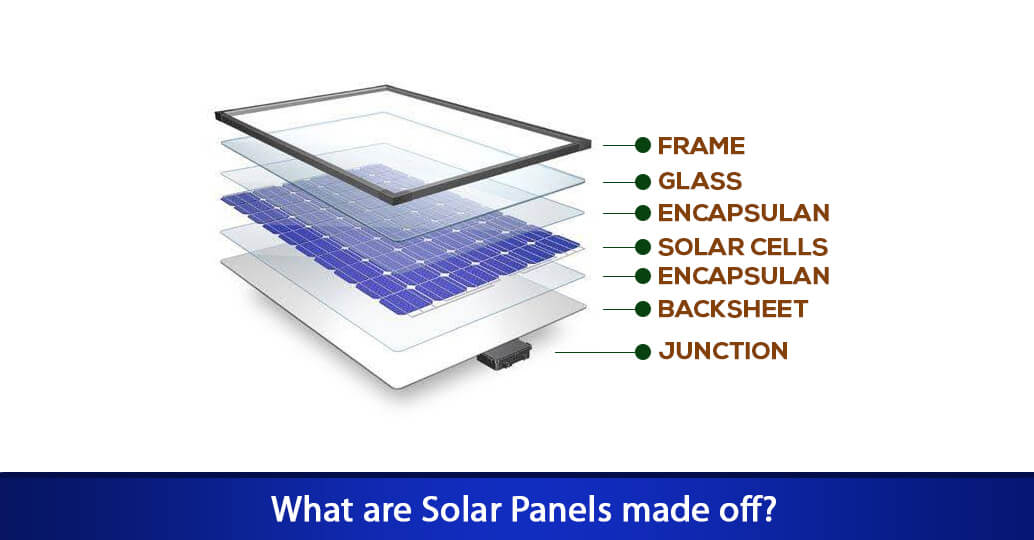
What are Solar Panels made off?

Nowadays, solar is the world’s least expensive energy source. Many individuals wondering about how solar PV can be so productive and affordable while as yet giving “green” energy. Addressing that frequently asked question implies how solar-powered energy works, how solar panels are produced and what the parts of solar panels are. Most panels that are available on market, are made of monocrystalline, polycrystalline, or thin film. In this article, we take you through what the solar panels, what parts required to produce solar panel and how the different ways solar cell are made, etc.

What are Solar Panels?

Solar Panels are also referred to as photovoltaic cells (PV), which work to generate power from sunlight. Photovoltaic cells are associated electrically and flawlessly composed into a large frame that is known as a solar panel. The solar panels are made of silicon semiconductors that absorb sunlight and afterward convert it into power.

Right now, solar panels which are utilized for residential purpose, that are able to take around 20% of the sunlight they get and convert it into power. It is known as solar efficiency. There are a few different types of solar cells available that are utilized for commercial purposes. These can have an efficiency of up to 40%. Apparently, it will more expensive than the residential model.

A most significant aspect of solar technology is the way that advances in the field are continually being made, raising the quality and effectiveness. As expected, this will explore further development. If these feature increases, the cost of solar panels will keep falling which helps to make it more availability to a wide number of people.

Key components about making solar panels

Solar panels are usually made using a couple of key components: silicon, metal, and glass. Standard panels are either made using monocrystalline or polycrystalline silicon.

How Solar Panels are made?

Solar photovoltaic is made with various parts, the most significant of which are silicon cells. Silicon, atomic number 14 on the periodic table, is a nonmetal with conductive properties that enable it to convert sunlight into electricity. At the point when light interacts with a silicon cell, it makes electrons be set into movement, which initiates a flow of power. This is known as the “photovoltaic effect.”

Silicon cells alone can’t provide power to your home. Silicon cells are paired with metal wiring, which enables the solar cell’s electrons to escape and supply power. Silicon arrives in various cell structures: single cell (monocrystalline), polycrystalline or amorphous forms and thin-film solar panels.

Monocrystalline solar panels

Monocrystalline: It is referred to as single-crystalline, these solar panels consist of one crystalline structure, giving them deep dark shading. Monocrystalline cells have the most noteworthy energy efficiency at around 15%-21%, which means they convert 15%-21% of the absorbed solar energy into electricity. It is considered the highest quality of the types of material.

Polycrystalline solar panels

A Polycrystalline cell is referred to as multi-crystalline cells. It has silicon impurities than monocrystalline panels. This makes it less efficient, normally converting around 13-16% and more affordable. Polycrystalline solar panels are first introduced in 1981.It is considered as mid-range panels in terms of cost and efficiency out of three types materials utilized.

Thin Film solar panels

Thin film solar panels are made by placing a few thin layers of photovoltaic over one another to makes the module. There are a couple of various kinds of thin film solar panel, and the way by which they differ from one another comes down to the material utilized for the PV layers. The sorts are as per the following:

  • Amorphous silicon
  • Cadmium telluride
  • Organic PV cells
  • Copper indium gallium selenide

Thin film solar panels are considered as the least expensive solar panels and these panels have very low energy efficiency.. The low energy efficiency and simplicity of producing these panels makes them appropriate for commercial properties where there is more space accessible.

Solar panel manufacturing process

Monocrystalline solar panels are made from one large size silicon block and these are created in silicon wafer formats. The manufacturing procedure includes cutting individual wafers of silicon that can be attached to a solar panel. Mono-crystalline silicon cells are more effective than polycrystalline or amorphous solar cells. Making individual monocrystalline wafers is more work escalated, and consequently, they are more costly to produce than polycrystalline cells. Monocrystalline cells have dark shading and are regularly connected with the sleek look of SunPower’s top-notch panels.

Polycrystalline solar cells are silicon cells, but instead of being framed in a large block and cut into wafer formats, they are made by melting silicons together. Many silicon atoms are dissolved and afterward re-combined into the panel itself. Polycrystalline cells are less effective and more affordable than monocrystalline cells. They have a bluish shade that is connected with the stylish of SolarWorld solar panels.

Amorphous silicon cells make flexible solar panel materials that are utilized in thin film solar panels. Amorphous silicon cells are non-crystalline and rather are appended to a substrate like glass, plastic or metal. In spite of the fact that a perfect use case for flexibility, amorphous solar cells are inefficient than mono or polycrystalline cells. First Solar is well known for manufacturing of thin film panels in the U.S.

After a solar cell is made; solar panel manufacturers connect the electrical equipment. Then manufacturers add anti-reflective coating and lodging the whole framework in a metal and glass casing.

What are the parts of a solar panel?

The materials used to produce the cells for solar panels are just a part of the solar panel itself. The solar panel manufacturing process has six different components that bring together. Here are the basic parts of a solar panel:

  • Silicon sunlight based cells
  • Metal frame (aluminum)
  • Bus wire
  • Plexiglas
  • Glass sheet for casing
  • Standard 12V Wire

In addition, a standard solar panel incorporates a glass casing at the front of the panel to include strength and protection for the silicon PV. Under the glass outside, the panel has a casing for protection and a defensive back sheet, which helps for heat dissemination and humidity inside the panel. The protection is especially significant on the grounds that temperature increments will prompt a diminishing inefficiency, bringing about a lower solar power yield. In this manner, PV manufacturers must go to additional lengths to ensure that light is being absorbed without the technology being overheated.

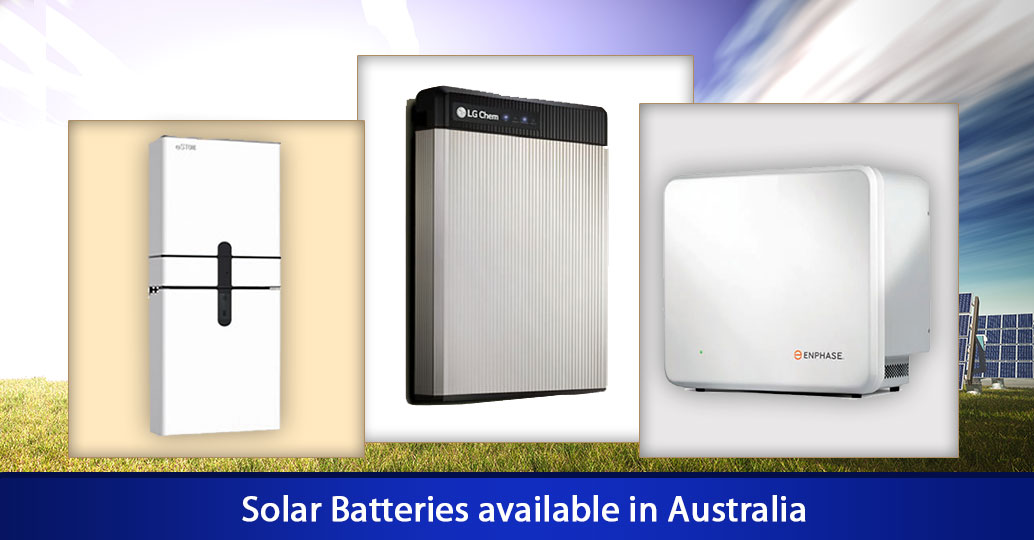
Solar Batteries available in Australia

The energy market is changing quickly, and solar storage units (solar batteries), are a huge part of this. An ever-increasing number of Australians are installing solar batteries to supplement their rooftop solar system, to store the power created by their panels for use later on, or to export back to the grid in return for a discount.

If you’re thinking about installing a solar battery, then please stick around. As we take you through the nuts and bolts, including what a solar battery is, the types of solar batteries there is information about cost, lifespan, and availability of solar batteries available in Australia.

A solar battery’s main function is to store power created by solar panels to use after sunset. Usually, when power is created by solar panels that aren’t utilized promptly by a household, it is redirected to the grid, where the client gets what’s is known as a ‘feed-in tariff’ – a discount on their energy bill.

Refunds will regularly add up to 5c to 20c per kWh of solar power sent out to the network.

Having a sunlight based battery can assist clients with setting aside cash by utilizing power created from their own solar system, as opposed to depending on the grid. This is made conceivable on the grounds that the cost of power from the framework (20-35c/kWh) generally surpasses the standard feed-in duty rate they would get for sending out power as opposed to expending it (5-20c/kWh). Solar batteries likewise enable clients to take advantage of the feed-in taxes. Before going for solar, you need to know in detail about two types of solar batteries available in the market. Below is the detail.

Grid-tie and Off-grid Solar Battery Systems

  Grid-tie Off-grid
Inverter Dual function inverter permits excess produced capacity to be supplied to the utility grid while keeping the energy flowing from the boards as well as a battery bank when the utility grid is down. Standalone off-grid inverter needed just to convert DC from boards into AC for use in the home appliances.
Battery size Frequently scaled to provide power to just those devices and/or appliances as “directed” by the proprietor to the installer (lights, PCs, fridge, cooler, and so forth.) Optional, similar to its size. Required to get to energy when solar panels are not producing enough power for the household. Size fluctuates as per the proprietor’s requirements.

Solar energy is the fastest-growing industry. In recent years, few innovative battery storage technologies have come. For the individuals who aren’t concerned about it, a solar battery is basically simply – a battery that stores power generated by your sun oriented solar panels. A few years back, solar energy that was not promptly utilized by your household would be transferred into the energy through the grid. Nowadays, if your home has installed battery storage, this energy would now be stored and utilized later on.

There are a few reasons to opt for a battery bank for residential solar PV System:

  • Energy Independence
  • Significant economic benefit
  • Power backup
  • Net metering credit
  • Not bound to the daily cycle of the sun

Major types of solar batteries

Lithium-ion Flooded Lead-Acid Gelled Electrolyte Sealed Lead-Acid Sealed Absorbed Glass Mat Lead-Acid (AGM) Flow
Lithium iron phosphate (LFP) batteries can be utilized for solar energy storage. It is the most commonly used battery. It is lightweight and smaller than a Lead-Acid battery because of its high storage capacity.A good quality battery can last as long as 10 years.It is temperature sensitive and expensive. Its price twice that of Lead-Acid batteries. It doesn’t require any water filling or refilling maintenance. A flooded Lead-Acid battery is ideal for medium to high capacity off-grid. The battery size is similar to auto batteries, yet a full bank of batteries is space-consuming. The battery life span depends on many factors like cycling etc. Well-maintained Flooded Lead-Acid batteries can last as long as 15 years or more, yet four to eight years is almost certain. It is the cheapest of all types of PV solar applications. It requires regular maintenance like adding water, cleaning terminals, etc. Gelled Electrolyte Sealed Lead-Acid uses silica gel in which electrolyte is suspended. It is ideal for most profound cycle applications. It varies by storage capacity, yet similar to a marine or auto battery. For home, it will consist of a few batteries. If properly maintained, battery lifespan will be 8 years, but in most cases, battery lifespan will be two to five years. Slightly expensive than a comparable limit AGM battery. But the cheapest upfront cost of all types of solar PV applications. Sealed Absorbed Glass Mat Lead-Acid (AGM) in which the electrolyte is held in thin glass mats rather than openly flooding the plates. It is well-suited for standalone applications with inconsistent discharges, yet innovation is improving. The battery size is Similar to flooded lead-acid and Gelled Electrolyte Sealed Lead-Acid batteries. It requires no maintenance. It is a slightly lower upfront cost than Lithium iron phosphate (LFP) batteries but more expensive compared to flooded lead-acid batteries. The flow consists of reaction stacks isolated by electrolytes held away tanks. It is ideal for large power storage. Its size varies, can be exceptionally huge. It has a low maintenance cost. The battery has a long lifespan- 25 years or more for vanadium redox batteries. It is expensive; despite the fact that advances in organic aqueous technology may lead considerably to bring down costs going ahead.

There are several batteries are available in Australia

LG Chem Battery:

LG Chem Battery has a world class features of being its supreme compactness and lightweight nature of the RESU. It is designed in such a way that allows you to install it easily within a wall-mounted or floor-standing position. No matter whether it’s for indoor or outdoor requirements.

The new RESU series features DC round-trip efficiency (95%) & industry-leading continuous power (4.2kW for RESU6.5). With having L&S (Lamination & Stacking) technology in LG Chem’s, provides durability ensuring 80% of capacity retention even after 10 years.

Enphase AC Battery:

The Enphase AC Battery™ is easy to install, protected, very reliable, and provides lowest lifetime enery cost for both new solar clients and retrofit clients. As an installer, you can plan the appropriate system size to meet the requirements of the householders.

Features:

  • It is quick and easy to install.
  • Lithium iron phosphate (LFP) technology for long cycle life.
  • Plug and play installation.
  • Cells safety tested and ensured by TÜV Rheinland.
  • Prismatic cells are highly stable with respect of time.

EWS Alpha:

On Grid Energy Storage System (ESS) complete solution for residential applications. It has compact design and high energy density.

Features:

  • Easy to install.
  • Fast response.
  • High UPS capacity.
  • AlphaESS uses Li-phosphate for its safety and long lifespan.
  • All systems can be monitored by Web and iOS/Android APP.

We’ve discussed the batteries that are available in Australia. Solar Penrith is a specialist in the field of energy storage, delivering professionally installed solar systems with the best battery solutions to improve sustainability, energy freedom for both on-grid and off-grid requirements. If you need any battery-related information and service around Australia, give us a call or fill in your details and get a free quote today.

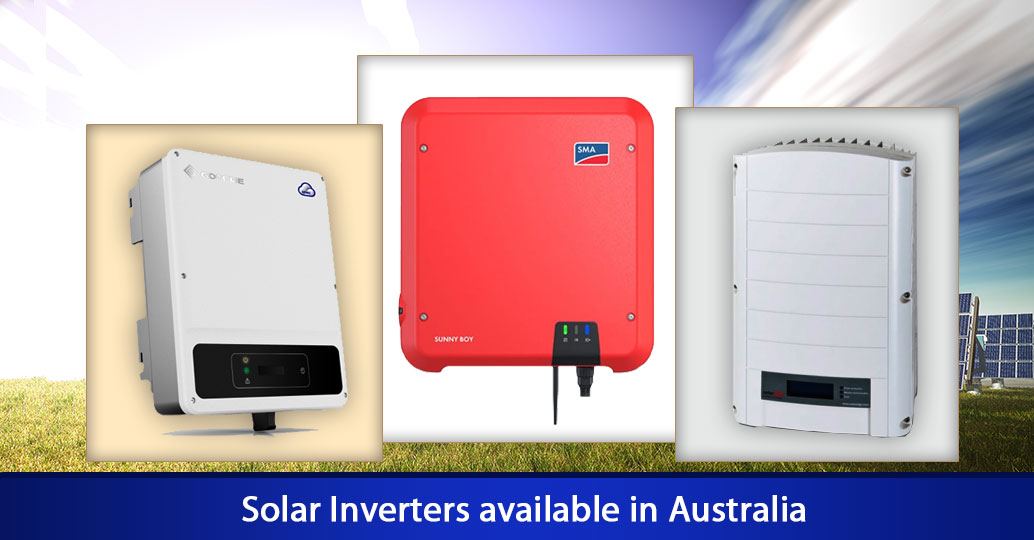
Solar Inverters available in Australia

Solar inverter plays a crucial role in the solar power system. The basic function of the inverter is to convert the direct current (DC) of a PV solar panel into alternating current (AC) for the utilization of power. Where most faults in a solar PV system happen, then it’s important to pick a quality solar inverter that will last up to 15 years, to guarantee you get maximum return on your investment. Inverters are usually the most expensive part of the system and it has a shorter life span than a solar panel. Going with a quality inverter is definitely worth it in the long term. We have seen many customers choose cheap solar inverter in beginning; they may have to replace it later. From this perspective, choosing a quality inverter is one if not the most important step when going solar.

Before buying a solar inverter, you should keep in mind a few specific points.

Common inverter types

There are mainly four types of inverters-Grid and Hybrid Inverters which are connected to the electricity grid and further separated into String and Micro Inverters. At that point, there are off-grid inverters for use in remote zones just as central inverters for commercial business and utility-scale solar-based arrays.

Compare the efficiency of different solar inverters

It is necessary to measure the efficiency of the solar inverter when you choose an inverter. Each and every inverter has its own efficiency curve, depends on the brand model & brand. Actually, inverter efficiency is proportional to the amount of power drawn. The efficiency curve is displayed by a chart showing how efficiency fluctuates with input power or voltage fed into it. It’s advised to usually aim for the most efficient capacity a solar inverter can offer when you want to buy it.

Power Capacity

How many loads can an inverter handle? Its power output is rated in watts (watts = amps x volts). There are three levels of power rating-a continuous rating, a limited-time rating, and a surge rating. Continuous means the amount of power the inverter can handle for an indefinite period of hours. When an inverter is rated at a certain number of watts that number generally refers to its continuous rating.

The limited-time rating is a higher number of watts than it can handle for a defined period of time, typically 10 or 20 minutes. The inverter specifications should define these ratings in relation to ambient temperature (the temperature of the surrounding atmosphere). When the inverter gets too hot, it will shut off. This will happen more quickly in a hot atmosphere.

The potential customers in Australia who are planning to install solar inverters for utility-scale, residential or commercial projects, they’re getting confused about which solar inverters are available in Australia. We have researched about solar inverter market in Australia from different sources such as distributors, dealers, solar installers, etc. Then we found the following solar inverter brands for residential, commercial, or utility-scale projects.

We’ve assembled a rundown with some of the best inverters found in Australia, according to the guarantees, manufacturing procedure, and monitoring highlights.

Sunny Boy 3.0 / 3.6 / 4.0 / 5.0:

The new Sunny Boy 3.0 – 5.0 succeeds the globally successful Sunny Boy 3000 – 5000TL. It ensures maximum energy produces for your homes. With the integrated SMA Smart Connected assistance, the inverter offers simplicity and comfort to the PV installers and operators. With its reduced weight, the Sunny Boy can be installed rapidly through occupying minimum space. The Sunny Boy can be charged rapidly by means of cell phone or tablet on account of its web interface.

The new Sunny Boy 3.0 – 5.0 is highly efficient, easy to use. SMA automatically monitors the individual inverters for anomalies around the clock during operation.

Sunny Tri-Power Inverter:

It has integrated grid management functions and module-tailored design with Optiflex. Sunny Tri-Power Inverter is ideal inverter for large-scale commercial and industrial plants. It delivers remarkable high yields with a maximum efficiency of 98.3 %. It additionally offers tremendous design flexibility and compatibility with numerous PV modules on account of its multistring abilities and wide range of input voltage (DC input voltage of up to 1,000 V).

It has SUNCLIX DC plug-in system, Integrated ESS (Electronic Solar Switch) and Active temperature management system with OptiCoo. Integrated Plant Control, which enables the inverter to regulate receptive power at the purpose of common coupling.

GOODWE DNS Series Inverters:

GOODWE DNS Series Inverters is an ideal inverter for private establishments on account of its reduced estimate and light weight. It is single phase on grid inverter which is designed for strength and longevity under modern industrial standard. It is offering high efficiency and functionalities. GOODWE DNS Series Inverters is IP65 rated so it tends to be mounted either inside or outside your home.

SolarEdge Single Phase Inverter:

SolarEdge Single Phase Inverter is world record setting solar manufacturer. It is ideal to work with SolarEdge power optimizers. It is rigorously tested for efficiency and reliability. SolarEdge Single Phase Inverter is small, lightweight and easy to install. It has built in module- level monitoring and 25-year performance guarantee. SolarEdge Single Phase Inverter is certified to withstand challenging weather conditions.

KEHUA Inverter (SPI-B2 Series):

KEHUA Inverter (SPI-B2 Series) is single Phase String Inverter. Its advanced control Algorithms provides higher grid adaptive ability and stability. It is Industry’s first cold-resistant inverter with superior operating temperature from -40C to 60C. KEHUA Inverter (SPI-B2 Series) is High efficiency inverter topology which built-In LCD Screen and aluminum alloy die-casted chassis.

Growatt PV Inverter:

Growatt PV Inverter is transformerless GT topology which is ideal for residential, commercial roof, utility-scale plant, and small off-grid system. It has high efficiency of 97.9% and wide input voltage range. Growatt PV Inverter has Multi MPP controller and Bluetooth technology.

Fronius Primo Transformerless Inverter:

The transformerless Fronius Primo is the perfect smaller single-stage inverter for private and little scale business applications with control classes from 3.8 to 8.2 kW. As per ESA rules for private applications, the Fronius Primo can work effectively at a most extreme information voltage of 600 V.

SolaX- X1 Boost dual MPPT Inverter:

Solax have built up a scope of single stage inverters, unparalleled in the business for their quality, dependability and effectiveness. The X1 Boost series are high caliber double MPPT inverter offering productivity and unwavering quality at a top notch cost.

Zever Solar Single-Phase Inverter:

Zever Solar Single-Phase Inverter is consolidates into simple, reliable and affordable PV inverters. By presenting a protected inverter topology we utilize less power electronic segments for additionally expanded dependability. It is lightweight, high efficiency of 97.9% and wide input voltage range. Its compact design with IP65 casing is ideal for outdoor use.

Enphase IQ 7, IQ 7 and IQ 7X Microinverters:

The smart-grid ready Enphase IQ 7 Microinverter series achieves highest efficiency. It has faster improved installation and lighter two-wire cabling. It complies with advanced grid support, voltage and frequency ride-through requirements.

Sungrow SG3K/ 3K6 / 4K6/5KTL-D Inverter:

Sungrow SG3K/ 3K6 / 4K6/5KTL-D Inverter is compatible different residential rooftop system design. It is easily accessible for home WiFi system, easy to enjoy the online monitoring. It has Wireless communication design and remote monitoring system. It has maximum input voltage 600V which is compatible with different PV panel and string design.

Sungrow SG3K/ 3K6 / 4K6/5KTL-D Inverter:

Solis 4G Single Phase Inverter is High switch frequency technology which has optionally integrated export power control function. The slim and lightweight one board design reduces the risks caused by the connector between PCB boards. The inverter is ideal for domestic installations. It has high efficiency and Ultra wide input voltage range.

Here we’ve discussed the solar inverters which are available in Australia. Solar Penrith, NSW is experienced in solar inverters, solar panels installation, and solar products for the past decade. If you’re seeking an appropriate solar inverter for your residential and commercial projects, you may contact us. In our search to find the perfect products for our clients, we do not just stop in Australia. Solar Penrith goes across the world to hunt the leading companies and innovative technologies and brings them to the people of Australia.

Newsletter

Signup for our Newsletter to get the latest news, tips, community updates and more into your inbox.